
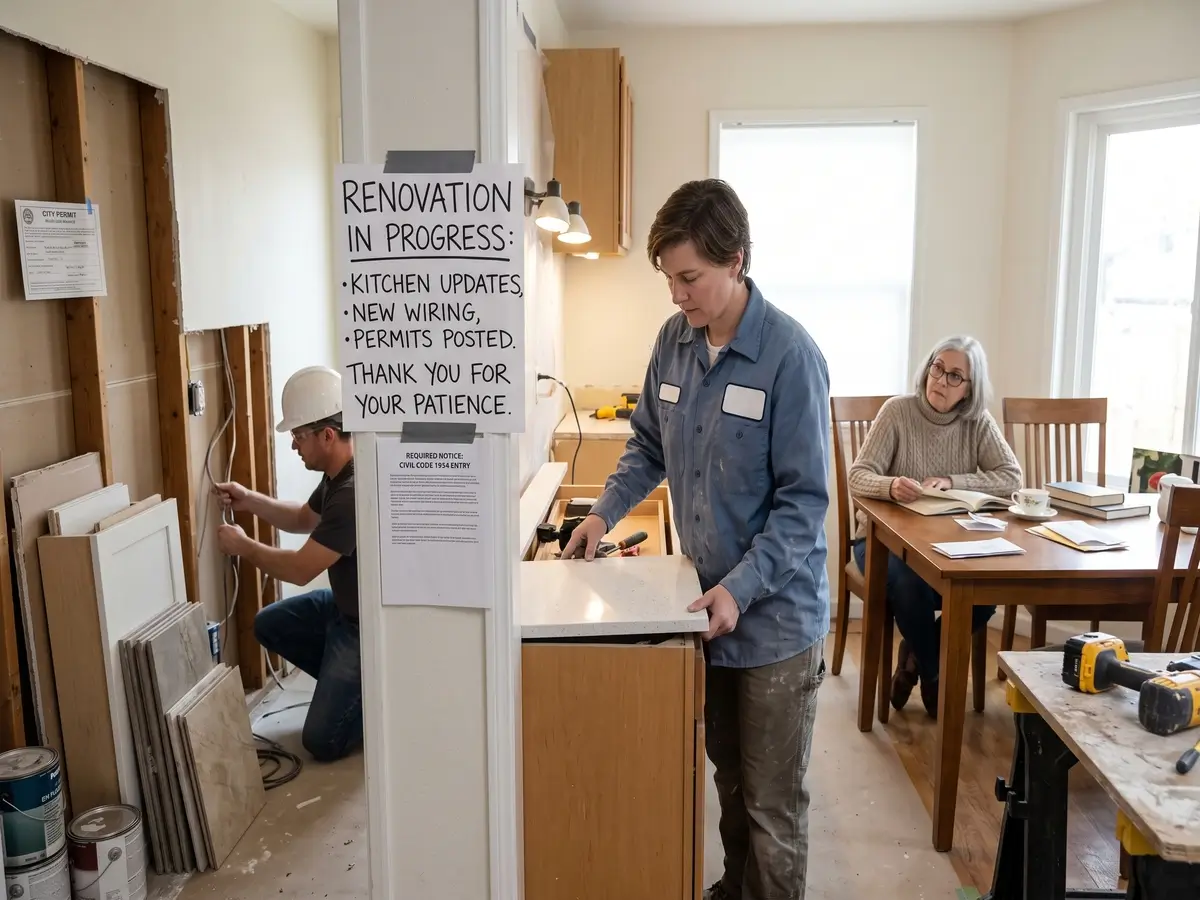
Is Your Fair Oaks Renovation Plan Quietly Setting Up a Tenant Dispute?
The kitchen is dated, the bathroom fan rattles, and the HVAC is limping through another season. You want the upgrade, but your tenant is still living there and has no plans to leave.
That is where many California landlords get stuck. Push too hard, and a simple remodel turns into a wrongful eviction claim. Wait too long and deferred maintenance eats your returns.
This guide explains how AB 1482 and SB 567 treat renovations, when a tenant can stay, when you can terminate a tenancy without cause, and how to protect the project and the relationship.
Key Takeaways
Before you schedule a single contractor, keep these points in mind.
Coverage comes first: Confirm your rental is covered by AB 1482 before planning any work.
Cosmetic work rarely justifies a move-out: Paint, flooring, and fixture upgrades are typically done around an occupied unit, not through a termination.
Substantial remodels carry strict proof requirements: Since April 1, 2024, SB 567 requires permits, a detailed notice, and at least 30 consecutive days of necessary vacancy.
Documentation protects the owner: Clear notices and written records keep a well-intended upgrade from becoming a dispute.
Renovation Rules by the Numbers
30 consecutive days: Minimum vacancy a qualifying substantial remodel must require under Civil Code Section 1946.2 |
1 month's rent: Minimum relocation assistance, paid within 15 calendar days of notice or waived as final rent |
24 hours: Written entry notice; California presumes reasonable under Civil Code Section 1954 |
12 months: Occupancy after which AB 1482 just-cause protections apply |
17 days: Average days on market for JTS Property Management rentals |
IN THIS GUIDE
Confirm Whether AB 1482 Applies to Your Rental
Cosmetic Upgrades vs. a Substantial Remodel
The Notice and Relocation Rules Behind a Remodel Move-Out
How to Renovate Around an Occupied Unit Without Friction
Costly Renovation Mistakes Fair Oaks Owners Make
Confirm Whether AB 1482 Applies to Your Rental
Every renovation decision starts with one question: is this unit covered?
Which Rentals the Tenant Protection Act Covers
AB 1482 generally applies to residential rentals more than 15 years old, measured on a rolling basis. Once a tenant has lawfully occupied the unit for 12 months, the owner needs a recognized just cause to end the tenancy.
Exemptions Worth Double-Checking
Exemptions are narrow. Situations to review include:
Single-family homes and condos owned by individuals, exempt only when the lease includes the written exemption notice the law requires
Homes owned by a REIT, a corporation, or an LLC with a corporate member, which generally remain covered
Duplexes where the owner lives in one unit for the entire tenancy
Units inside the City of Sacramento, where the city's Tenant Protection Program adds another layer
For Fair Oaks owners in unincorporated Sacramento County, statewide rules usually set the baseline. The California Attorney General's Tenant Protection Act guide helps if your status is unclear.
Cosmetic Upgrades vs. a Substantial Remodel
The type of work determines whether your tenant stays, steps out briefly, or can lawfully be asked to leave.
Upgrades You Can Complete With the Tenant in Place
New paint, flooring, countertops, cabinet fronts, light fixtures, and appliance swaps are cosmetic or routine, even when the project feels major.
Under SB 567, cosmetic improvements alone never qualify as a substantial remodel, regardless of cost. A kitchen refresh is scheduled around the tenant, not used to end the lease.
What Legally Counts as a Substantial Remodel
The work must replace or substantially modify a structural, electrical, plumbing, or mechanical system that requires a permit, or abate hazardous materials such as lead-based paint, mold, or asbestos.
It must also be impossible to complete safely with the tenant in place, requiring them to vacate for at least 30 consecutive days. If the unit is unsafe for only part of that window, the tenant does not have to leave on livable days.
Getting this right early keeps owners from building a project around a termination they cannot legally use.
The Notice and Relocation Rules Behind a Remodel Move-Out
When a project genuinely qualifies, the process is detailed, and missing one element can invalidate the notice.
What the Written Notice Must Include
Under Civil Code Section 1946.2, as amended by SB 567, the notice must contain:
The owner's intent to substantially remodel, stated as the reason for termination
A description of the work and its approximate expected duration
A copy of the required permits, or for hazardous material abatement, a signed contract that reasonably details the work
A statement that the tenant may share contact details if they want to reoccupy the unit afterward
A statement that if the work is not started or completed, the tenant must be offered the unit back at the same rent and terms
Relocation Assistance and Timing
The owner must either pay one month's rent within 15 calendar days of serving the notice or waive the final month's rent in writing.
Permits come first. Serving a remodel notice and pulling permits later is one of the fastest ways to turn a legitimate project into a wrongful eviction claim. Treat the notice and payment as one package, prepared together before serving anything.
How to Renovate Around an Occupied Unit Without Friction
For most owners, the smarter path is to upgrade while the tenant stays, which requires careful planning.
Entry Notices, Scheduling, and Tenant Communication
California Civil Code Section 1954 requires reasonable written notice before entry; 24 hours is presumed reasonable during normal business hours unless the tenant agrees otherwise.
Share a project calendar early, so your tenant knows which rooms are affected and for how long.
If a kitchen or bathroom will be out of service, address it in writing. A temporary rent credit or short hotel stay can ease the disruption when documented as a voluntary agreement and recorded on your monthly owner statements.
Permits, Contractors, and the Paper Trail
Licensed contractors and permits you pull protect both property value and your legal position. Before-and-after photos, signed scopes, and saved tenant messages create the same paper trail that protects owners in deposit and eviction disputes.
Our maintenance services coordinate access windows, crews, and tenant updates in one place. Strong vendor oversight for Fair Oaks rentals keeps quality, cost, and liability in check through every phase.
A smooth occupied renovation depends on clear timelines, licensed work, and records that tell the full story.
The best renovation is one your tenant can live through, and your paperwork can defend.
Costly Renovation Mistakes Fair Oaks Owners Make
Most renovation disputes trace back to a handful of avoidable errors.
Calling a cosmetic refresh a remodel: Using flooring or paint work to justify a move-out invites a wrongful eviction challenge.
Serving notice before permits are issued: SB 567 ties the notice to documentation that must already exist.
Raising rent to recover renovation costs: AB 1482 has no improvement pass-through, so covered increases must stay within 5% plus regional CPI, or 10%, whichever is lower.
Letting the project stall: If work never starts or is never completed, the former tenant must be offered the unit back on the same terms.
Violations can expose owners to damages, attorney's fees, and added penalties for willful conduct. Our California compliance playbook covers the broader rules around these requirements.
FAQs about Renovating Under AB 1482
Here are quick answers to the questions owners most often ask before starting work.
Can I End a Lease to Renovate a Kitchen or Bathroom?
Usually not, because cosmetic upgrades do not meet the substantial remodel. A project qualifies only if it involves permitted system work or hazardous material abatement that renders the unit unsafe for at least 30 consecutive days.
Do I Have to Pay Relocation Assistance for a Substantial Remodel?
Yes, covered tenants are owed one month's rent within 15 calendar days of the notice, or a written waiver of the final month's rent. Local ordinances may require more, so confirm the city's rules first.
Can I Raise the Rent After a Renovation?
For a covered unit, any increase must still fall within the AB 1482 annual cap. Renovation costs do not create an exception to that limit.
Upgrade the Property Without Downgrading Your Legal Position
Under AB 1482, the strongest renovation plan is built on permits, proof, and patience.
Renovating a tenant-occupied rental in California is absolutely doable, but the rules reward owners who plan before they swing a hammer. Know whether your unit is covered, separate cosmetic work from a true substantial remodel, and treat every notice as a document a judge may one day read.
At JTS Property Management, we help Fair Oaks and Sacramento-area owners plan upgrades that protect both their properties and their tenants. We coordinate licensed vendors, schedule compliant entries, keep tenants informed, and document every step so your investment improves without inviting an avoidable dispute.
If a remodel is on your calendar, let's map it out together before the first permit is pulled. Call our team at 916.534.7642 or explore our Fair Oaks property management services to see how we keep your renovation on track.